
5 Types of Bank Accounts to Help You Manage Money Better

Wondering how many bank accounts you should have? While everyone’s financial situation is different, many people use multiple accounts to organize bills, spending, savings, and future goals. Separating your money by purpose can make budgeting easier, reduce stress, and help you stay on track financially.
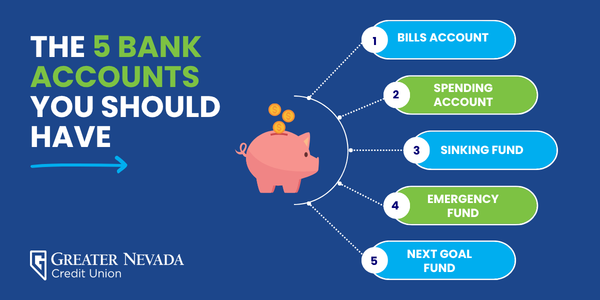
1. What is a Bills Account?
The first step towards financial organization is creating a dedicated bills account. By setting up direct deposit or automatic transfer, you can effortlessly cover recurring expenses such as rent, utilities, subscription services like Netflix, and more. This can help reduce missed payments and make monthly budgeting a lot less stressful. With a bills account, you gain control over your fixed expenses, ensuring that your financial obligations are met on time, every time.
2. What is a Spending Account?
For your day-to-day expenditures, a spending account is a must. Use it to track and manage expenses related to groceries, gas, Amazon splurges, and dining out. This account helps you stay on top of your budget without the unnecessary stress of overspending. By segregating your daily expenses, you gain a clear understanding of your spending patterns and can make informed decisions about where to cut back or save.
If your financial institution offers cash back rewards or debit card rewards, using that account for everyday spending can help you earn a little extra on purchases you already make.
3. What is a Sinking Fund?
Life is full of surprises, and not all of them come with a warning. A sinking fund is your proactive approach to preparing for the unexpected. Save money for holidays, unexpected maintenance costs, and those miscellaneous expenses that have a tendency to pop up when you least expect them. Building a sinking fund allows you to handle unforeseen expenses without derailing your overall financial plan.
Find a high-yield savings account so that your money earns more money. (Just starting out? Check out GNCU’s I Can Save account.)
4. What is an Emergency Fund?
Every financial plan needs a safety net, and that’s where the emergency fund comes in. This easily accessible account acts as a financial cushion for unexpected emergencies, providing peace of mind when you need it most. Many financial experts recommend saving at least three to six months’ worth of essential expenses in your emergency fund. Quick transfers from your emergency fund can be a lifesaver, allowing you to navigate unexpected expenses without resorting to high-interest loans or dipping into your long-term savings.
Bonus tip: for GNCU checking members, use your Share Savings account and transfer money instantly when needed.
5. What is a Next Goal Fund?
Achieving financial freedom isn’t just about meeting obligations; it’s also about building towards your dreams. The next goal fund is your tool for dreaming big and saving strategically. Whether it’s a dream vacation, a major purchase, or a life milestone, this account helps you allocate funds specifically for your next big adventure. By setting aside money for your long term goals, you’re taking active steps towards turning your aspirations into reality.
Some people find it easier to save when their goal fund is separate from their everyday spending account, so the money is out-of-sight and out-of-mind while you save.
Financial freedom is within reach when you have the right accounts in place. By managing your money like a pro through these five essential bank accounts – bills account, spending account, sinking fund, emergency fund, and next goal fund – you gain control over your finances and set the stage for long-term success. Let’s make those money goals a reality together!